

20ft Refrigerated Container Dimensions
Professional Temperature Controlled Solutions
Shipping Containers of Grangemouth provides high-specification refrigerated units for industrial and commercial sectors across Scotland. Whether your operation requires a permanent asset through our buy containers department or a flexible temporary unit via rent containers/shipping containers, understanding the physical constraints of a 20ft unit is essential. Every project begins with a container quote tailored to specific thermal and site requirements. These specialised units, often called reefers, differ significantly from standard dry boxes in construction and internal volume.
A reefer is a refrigerated shipping container used for temperature-controlled transport or storage. Shipping Containers of Grangemouth ensures all equipment is wind- and watertight, meaning the unit is sealed against external weather elements. Due to the integrated insulation and refrigeration machinery, a 20ft refrigerated container provides less internal space than a standard 20ft shipping container. This guide provides the metrics needed for site planning and inventory management.
20ft Reefer Technical Specifications
Precise measurements are critical when siting a unit or calculating pallet capacity. Shipping Containers of Grangemouth verifies these figures for all current stock. While external dimensions follow ISO standards, internal metrics vary slightly depending on insulation thickness and the specific refrigeration motor model installed.
| Description | Metric (m/kg) | Imperial (ft/lb) |
|---|---|---|
| External Length | 6.058 m | 20 ft 0 in |
| External Width | 2.438 m | 8 ft 0 in |
| External Height | 2.591 m | 8 ft 6 in |
| Internal Length | 5.450 m | 17 ft 10 in |
| Internal Width | 2.290 m | 7 ft 6 in |
| Internal Height | 2.275 m | 7 ft 5 in |
| Door Opening Width | 2.290 m | 7 ft 6 in |
| Door Opening Height | 2.264 m | 7 ft 5 in |
| Tare Weight | 2,850 kg | 6,283 lb |
| Maximum Payload | 27,630 kg | 60,913 lb |
| Internal Volume | 28.4 m³ | 1,003 cu ft |
Tare is the weight of the empty container, including the refrigeration machinery. Payload is the maximum weight of cargo the container can safely carry. Every unit provided by Shipping Containers of Grangemouth for export includes a valid CSC plate. A CSC plate is a safety approval plate required for international shipping. These units typically accommodate up to 10 standard UK pallets or 11 Euro pallets in a single tier.
Internal Design and Airflow Dynamics
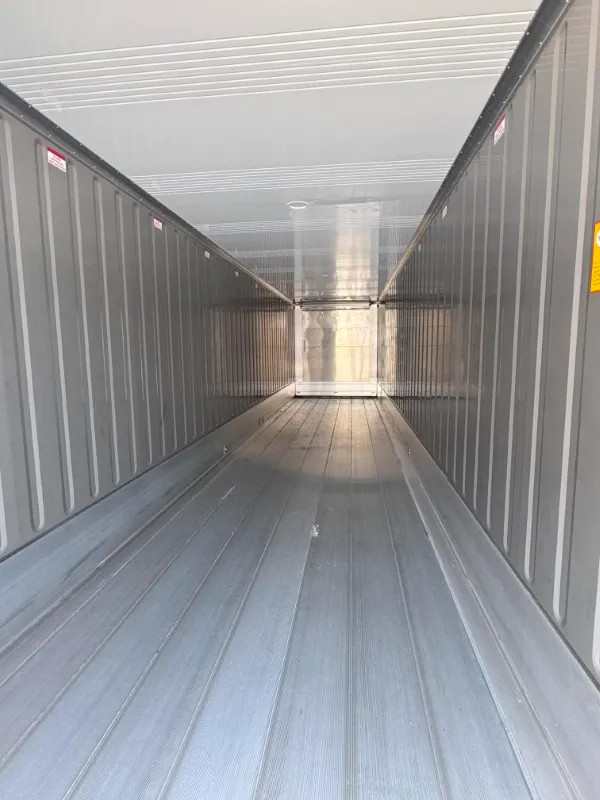
Refrigerated units from Shipping Containers of Grangemouth are engineered for uniform cooling. The internal walls are constructed from food-grade stainless steel or high-grade aluminium. These materials facilitate easy cleaning and prevent corrosion from moisture or chemical cleaning agents. The insulation consists of high-density polyurethane foam sandwiched between the outer and inner skins to maintain thermal stability.
T-Bar Flooring and Drainage
The flooring in a 20ft reefer differs from the marine-ply floors found in standard boxes. Shipping Containers of Grangemouth units feature aluminium T-bar floors. This flooring design consists of longitudinal rails that allow cold air to circulate beneath the cargo. Air is forced into the T-bars by the evaporator fans at the front of the unit and rises through the pallets to the roof, returning to the machinery. This bottom-air delivery system ensures that every part of the cargo stays at the set temperature. Internal floor drains at each corner allow for the removal of condensate or cleaning water.
Temperature Management
Our units support a temperature range from -40 degrees Celsius to +45 degrees Celsius. This flexibility allows for the storage of deep-frozen seafood, chilled dairy, pharmaceuticals, or even climate-sensitive electronics. The digital control panel allows for precise adjustments to temperature, humidity, and ventilation settings. Shipping Containers of Grangemouth provides units with modern microprocessors that log temperature data for compliance and insurance purposes.
Power Requirements and Site Setup
A refrigerated container requires a constant electrical supply to function. Shipping Containers of Grangemouth advises all clients on electrical infrastructure requirements before delivery. Standard units operate on 3-phase 380V to 460V power at 50Hz or 60Hz. Connection is typically via a 32-amp 4-pin or 5-pin industrial plug. If onsite power is unavailable, the unit requires a diesel generator, often called a genset.
Surface Preparation
Due to the tare weight and the sensitivity of the machinery, reefers must be placed on level, hardstanding ground. Hardstanding refers to a solid surface, such as concrete, tarmac, or compacted gravel, that supports the weight without sinking. An uneven surface can lead to structural racking, preventing the cargo doors from sealing properly. A poor seal causes temperature leakage and increases electricity consumption. Shipping Containers of Grangemouth recommends using railway sleepers or concrete pads at the corner castings to ensure the unit is perfectly level.
Drainage and Moisture
Refrigerated units generate condensate during the cooling cycle. Site planning must account for water runoff from the internal drains. If the unit is placed indoors or in a confined space, ensure there is sufficient ventilation for the condenser fan at the front of the unit to expel heat. Restricted airflow will cause the refrigeration machinery to overheat and fail.
Selection Grades: New and Used Reefers
Shipping Containers of Grangemouth stocks units in various condition grades to meet different budget and performance needs. Every unit undergoes a rigorous Pre-Trip Inspection to ensure the machinery and structure are fit for purpose.
One-Trip Refrigerated Units
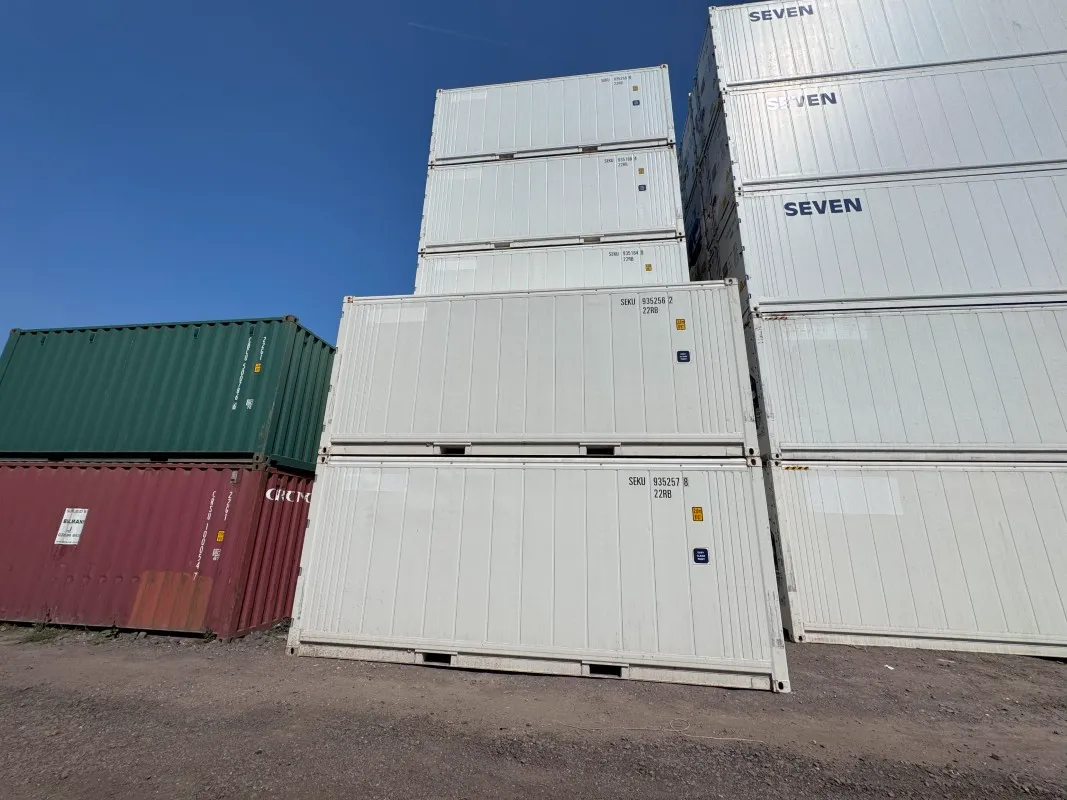
A one-trip container is a unit manufactured overseas and shipped to the UK with a single cargo load. These represent the highest quality available. They feature the latest refrigeration technology with improved energy efficiency and lower noise levels. For long-term pharmaceutical storage where temperature logs are scrutinised, one-trip units are the industry standard. View our premium stock at our refrigerated containers for sale page.
Ready to Start Your Project?
Get expert advice on container sales and hire today.
Used and IICL Units
Used units are sourced from global shipping lines. These units provide a cost-effective alternative for general food storage or seasonal use. Shipping Containers of Grangemouth also provides units maintained to IICL standards. IICL refers to the Institute of International Container Lessors, which sets a high standard for the repair of used units. For short-term projects, businesses often rent refrigerated containers from our used fleet. All used motors are serviced and tested before dispatch to ensure operational reliability.
Logistics and Delivery across Scotland
Shipping Containers of Grangemouth manages delivery to diverse locations, including Grangemouth, Glasgow, and Edinburgh. We utilise Hiab vehicles to position units with precision. A Hiab is a truck equipped with an onboard hydraulic crane that lifts the unit from the trailer to the ground.
Space Constraints
While the unit is 20ft long, the delivery vehicle requires approximately 60ft of straight-line space to offload. The vehicle needs a width of at least 10ft to deploy its stabilising legs. If you have restricted access, consider the 40ft refrigerated container requirements, which involve a significantly larger articulated vehicle. Always check for overhead cables and tree branches. Safety regulations require a minimum 20-metre clearance from live overhead power lines.
Regional Supply
Our strategically located depots ensure competitive transport costs across the region. We provide shipping container sales in Grangemouth and rental services for central projects. For the West Coast, our shipping container sales at the Glasgow hub facilitate rapid dispatch. Clients in the east can access equipment through shipping container sales in Edinburgh.
Can a 20ft reefer run on standard UK domestic power?
Standard units require 3-phase power. They cannot run on a standard 3-pin UK domestic socket without a specialised transformer or phase converter. Shipping Containers of Grangemouth recommends consulting an electrician to ensure your site is compatible with the reefer before you rent one.
What is the noise level of a refrigerated container?
Noise levels vary between manufacturers. Modern one-trip units are quieter than older models. If the unit is located near residential areas, consider positioning the machinery end away from neighbours or using sound-dampening barriers. For more specific noise data, please refer to our 20ft refrigerated container technical sheets.
Do I need to clean the unit after use?
Yes. Maintaining hygiene is critical, especially for food and medical storage. The stainless steel interior and aluminium T-bar floor can be steam-cleaned or pressure-washed. Ensure the drains are clear of debris to prevent water pooling. If you are using a 40ft shipping container for dry goods, cleaning is simpler, but for reefers, strict adherence to hygiene standards is required.
Are these units suitable for export?
All our units come with a valid CSC plate or can be inspected to obtain one. This ensures they are safe for international sea transport. If you are buying a unit for export, verify that the refrigeration machinery is compatible with the power supply at the destination country.
How much furniture fits in a 20ft reefer compared to a standard box?
A 20ft reefer has less internal volume than a standard 20ft shipping container due to the insulation and machinery box. You lose approximately 2 feet of internal length. Reefer units are rarely used for furniture storage unless the items are highly sensitive to temperature fluctuations.
